Rasmalai
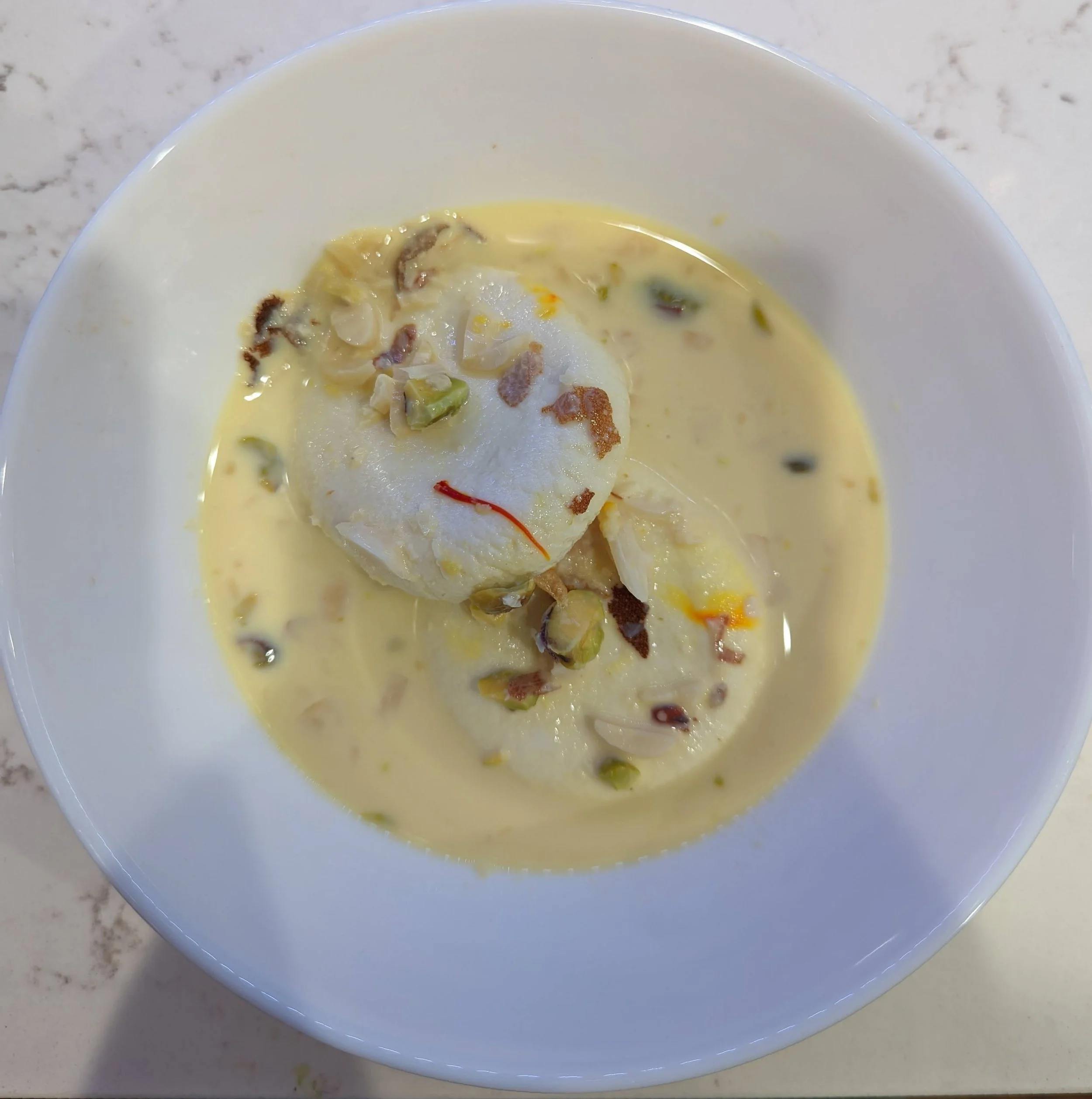
The moment
I always thought rasmalai was something you buy, not something you make. It belonged in sweet boxes from Indian stores, brought home for celebrations. It didn’t feel like something that could come out of your own kitchen without going wrong somewhere.
That assumption is probably why I wanted to try it.
Why I learned this
Lately, I’ve been thinking more about what it means to recreate things instead of relying on them being available. Not in a big philosophical way, just in small, everyday decisions. Cooking has been one of those areas where that shift shows up clearly.
Rasmalai felt like a good place to test that. It’s familiar, but not something I’ve seen made often around me. It sits somewhere between simple ingredients and a process that seems easy to mess up.
The experience
The part I was most unsure about was the paneer. Getting the texture right is not obvious. There’s no exact point where you can say it’s done, you have to judge it based on how it feels while kneading.
That uncertainty carries through the whole process. Shaping the discs, cooking them in syrup, making sure they hold together without becoming dense, it’s all small adjustments. Nothing is complicated on its own, but everything depends on getting those details right.
What stood out was how easy it is to overdo things. Knead a little too much, press a little too hard, leave it in the syrup longer than needed, and the result changes. The process rewards restraint more than effort.
The recipe I follow
Ingredients
For the discs:
1 liter whole milk
2–3 tbsp lemon juice or vinegar
1 tsp cornflour
For the syrup:
1 cup sugar
4 cups water
For the milk:
2 cups milk
3–4 tbsp sugar
Cardamom powder
Saffron strands
Chopped pistachios or almonds
Steps
Boil the milk and add lemon juice until it curdles. Strain using a cloth, rinse with cold water, and remove excess moisture.
Knead the paneer until smooth, then add a small amount of cornflour and knead again. Shape into small, flat discs.
Boil sugar and water, add the discs, and cook covered for about 10–12 minutes until they expand and soften.
Separately, heat milk with sugar, cardamom, and saffron until slightly thickened.
Gently squeeze the cooked discs and place them in the milk. Chill before serving.
What I learned
Making rasmalai changed how I think about learning something that initially feels out of reach. It’s not about whether the steps are complicated (they’re not). It’s about how much attention you pay while doing them.
The process depends on understanding when to stop as much as when to act. Adding more effort doesn’t necessarily improve the outcome. In some cases, it makes it worse.
That was the part I didn’t expect. Not the recipe itself, but the way it forces you to notice where precision matters and where restraint matters more.
Rasmalai went from something I would buy to something I can make and understand. The process is straightforward on paper, but sensitive in practice, and that difference is where most of the learning happens. It’s a good reminder that getting something right often comes down to paying attention to the details that actually matter, rather than trying to do more.